Premier Roofing Contractor in San Marcos, CA and Surrounding Areas
Trusted Roofing Solutions Built to Protect Your Home and Business
Request Free Estimate
Get Your Quote
Accepting Inquiries
Contact Us
We will get back to you as soon as possible.
Please try again later.

Welcome to JCIS Roofing Inc
JCIS Roofing Inc. is a trusted roofing company proudly serving San Diego County and surrounding communities. With over 30 years of industry experience, owner Juan Cisneros and his skilled team provide dependable residential and commercial roofing solutions. Services include roof installations, roof repairs, roof replacements, preventative maintenance, inspections, flashing repairs, and commercial roofing. JCIS Roofing works with asphalt shingles, tile, metal, and flat roofing systems to meet each property's unique needs. The company is committed to quality craftsmanship, durable materials, transparent pricing, and reliable communication throughout every project. Whether you need a minor roof repair or complete replacement, JCIS Roofing delivers professional service designed to protect your property for years to come.
Nothing gets added to your invoice that you have not already seen in a photograph, approved in writing, and understood in plain language first.
✓ Free estimates with no obligation attached
✓ Written warranty on materials and workmanship
✓ Licensed with the CSLB under number C1083214
✓ Daily cleanup and full debris haul-away
ROOFING IN SAN MARCOS,CA
THE ROOF IS THE ONLY PART OF YOUR HOUSE YOU CANNOT INSPECT YOURSELF.
You can see a cracked driveway and hear a failing water heater. A roof hides its problems until a ceiling stain appears, and by then the sheathing underneath has usually been wet for months. That is why we start every job on the roof itself rather than from the curb. We lift tile, probe underlayment, check flashing at every penetration, and photograph what we find. You get the same pictures we do, and a plain explanation of which findings need work now and which can wait a season.
STRAIGHT COURSES, TIGHT FLASHING, AND FASTENERS THAT HOLD.
Most leaks we chase are not material failures. They start where two planes meet: a valley, a chimney, a skylight curb, a pipe boot gone brittle in the sun. We flash those transitions with metal rather than sealant wherever the detail allows, because caulk is a 5-year fix and metal is a 30-year one. The finish work is what separates a roof that ages well from one that merely survives.
WHY CHOOSE US
30+ Years of Roofing Experience
Decades of hands-on industry experience allow JCIS Roofing to provide knowledgeable and dependable roofing solutions.
Residential & Commercial Expertise
JCIS Roofing handles roofing projects for both homeowners and commercial property owners.
Quality Craftsmanship
Every roofing project is completed with attention to detail, durable materials, and long-term performance in mind.
Comprehensive Roofing Solutions
From inspections and preventative maintenance to repairs and complete roof replacements, JCIS Roofing can handle roofing needs of all sizes.
OUR ROOFING SERVICES
WHAT WE DO
Six services cover nearly every call we get in San Diego County. Each one is handled by our own crew, under one written scope, with a single point of contact from start to finish.
Residential Roofing Services
Single-family homes need a roof matched to their pitch, their framing, and their neighborhood. We install shingle, tile, metal and flat systems on houses across the county, and we handle the permit paperwork with the city.
Commercial Roofing Services
Offices, retail buildings and warehouses lose money when a roof shuts them down. We schedule around your operating hours, stage materials clear of parking and entries, and keep the building open while the work goes on above it.
Roof Repair Services
A stain on the ceiling rarely sits under the actual leak. We trace water back to its entry point, open only what needs opening, and rebuild the detail that failed instead of burying it under another layer of sealant.
Roof Replacement Services
When repairs stop holding, replacement becomes the cheaper answer. We strip to the deck, replace any rotted sheathing we uncover, and rebuild the assembly to current code so the next 30 years stay quiet ones.
Tile Roofing Installation & Repair
Clay and concrete tile outlive the felt beneath them by decades. We lift and stack your existing tile, replace the failed underlayment, and reset the field so the roof looks untouched and drains the way it should.
Flat Roofing Installation & Repair
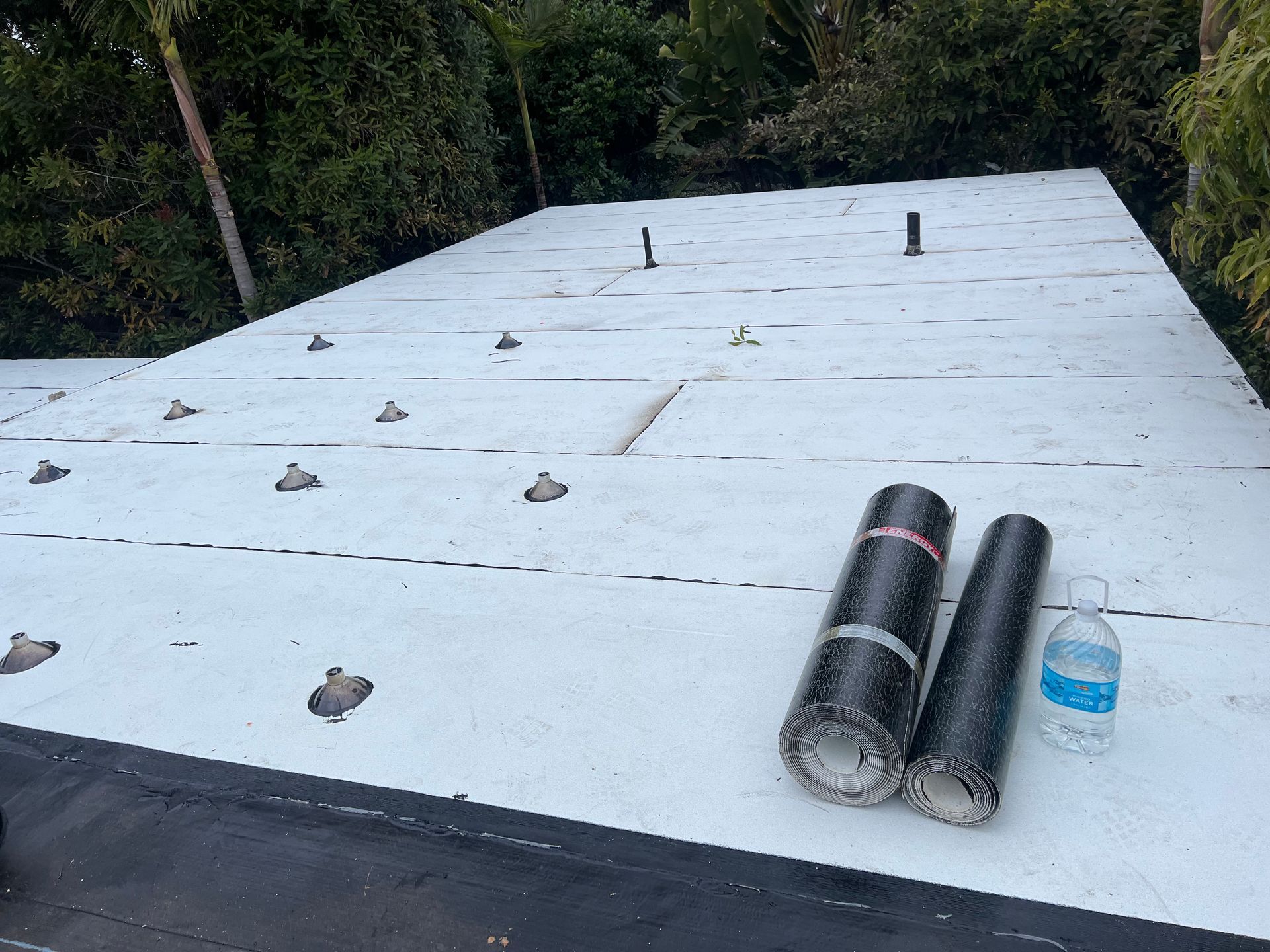
Low-slope roofs fail at the drains and the seams, not out in the middle of the field. We build in positive drainage, weld or torch the laps properly, and flash every curb and scupper so water leaves within 48 hours.
WHAT SAN MARCOS HOMEOWNERS SAY
JCIS ROOFING REVIEWS.
Customers often mention that we arrive on time, clean up after the work, and keep them informed throughout the project. Several reviews came from people who were out of town while we worked and followed the progress through photographs and videos we sent each evening.

service areas
SERVING SAN DIEGO COUNTY.
From our office on Rancheros Drive we reach most of the county inside an hour. Inland communities such as Escondido, Vista, Poway, Santee and Ramona get the wildfire detailing and heat-tolerant materials they need, while coastal work in Carlsbad, Encinitas and Del Mar gets corrosion-resistant fasteners and flashing built for salt air.
We also work Oceanside, Solana Beach, La Jolla, Chula Vista, El Cajon, La Mesa, Lakeside, Fallbrook and Temecula. If your address sits outside that list, ask us anyway. Distance rarely decides whether we take on a job.
Carlsbad, CA
Oceanside, CA
Encinitas, CA
Poway, CA
Solana Beach, CA
Del Mar, CA
Rancho Santa Fe, CA
San Diego, CA
Santee, CA
GET A FREE ROOF EVALUATION BEFORE THE NEXT RAIN.
FREE ESTIMATES · WRITTEN WARRANTIES · DRONE MEASUREMENTS
HOMES AND BUSINESSES · 30+ YEARS OF EXPERIENCE · CSLB #C1083214
RECENT WORK WE DID
VIEW OUR GALLERY.
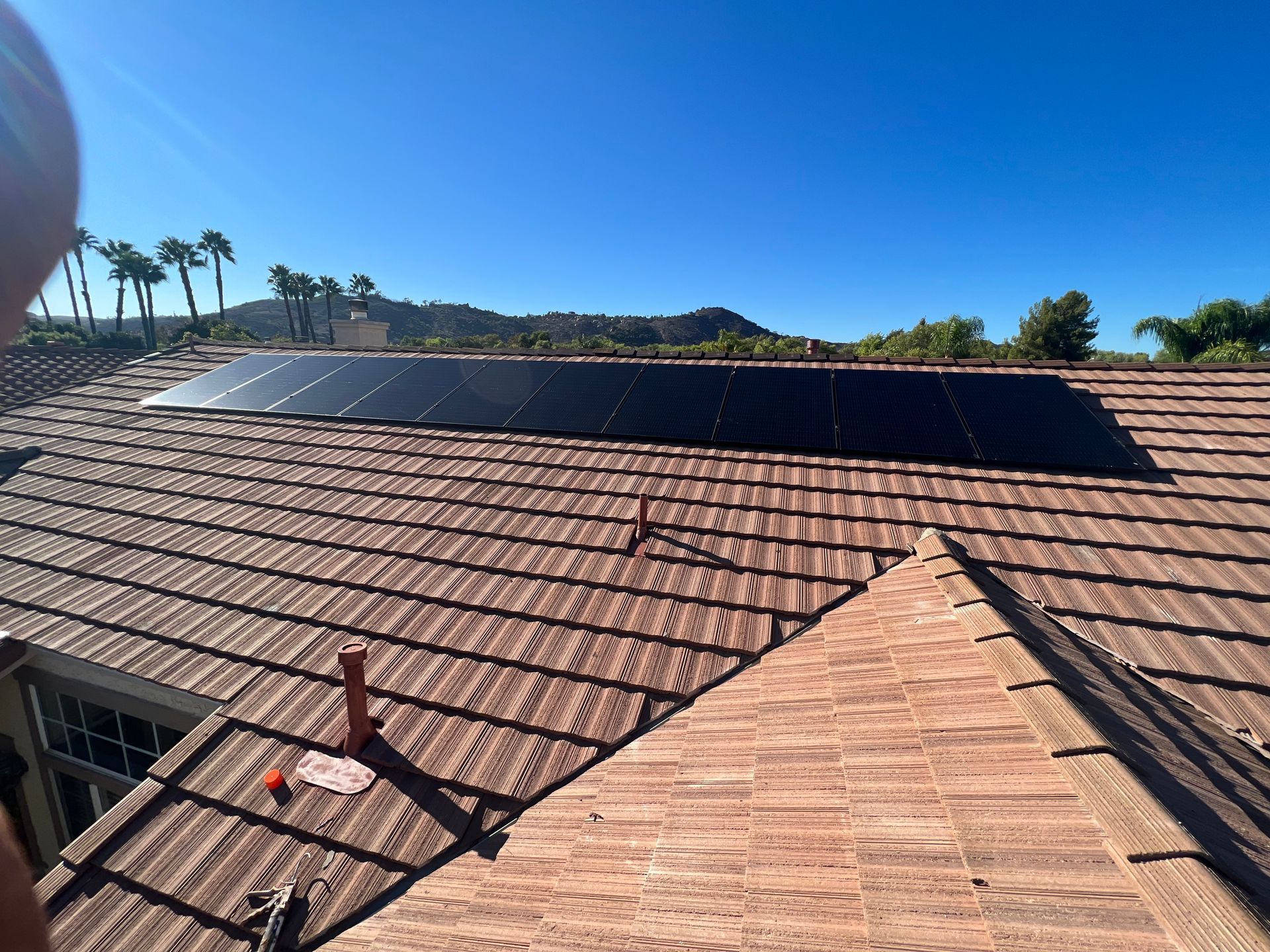
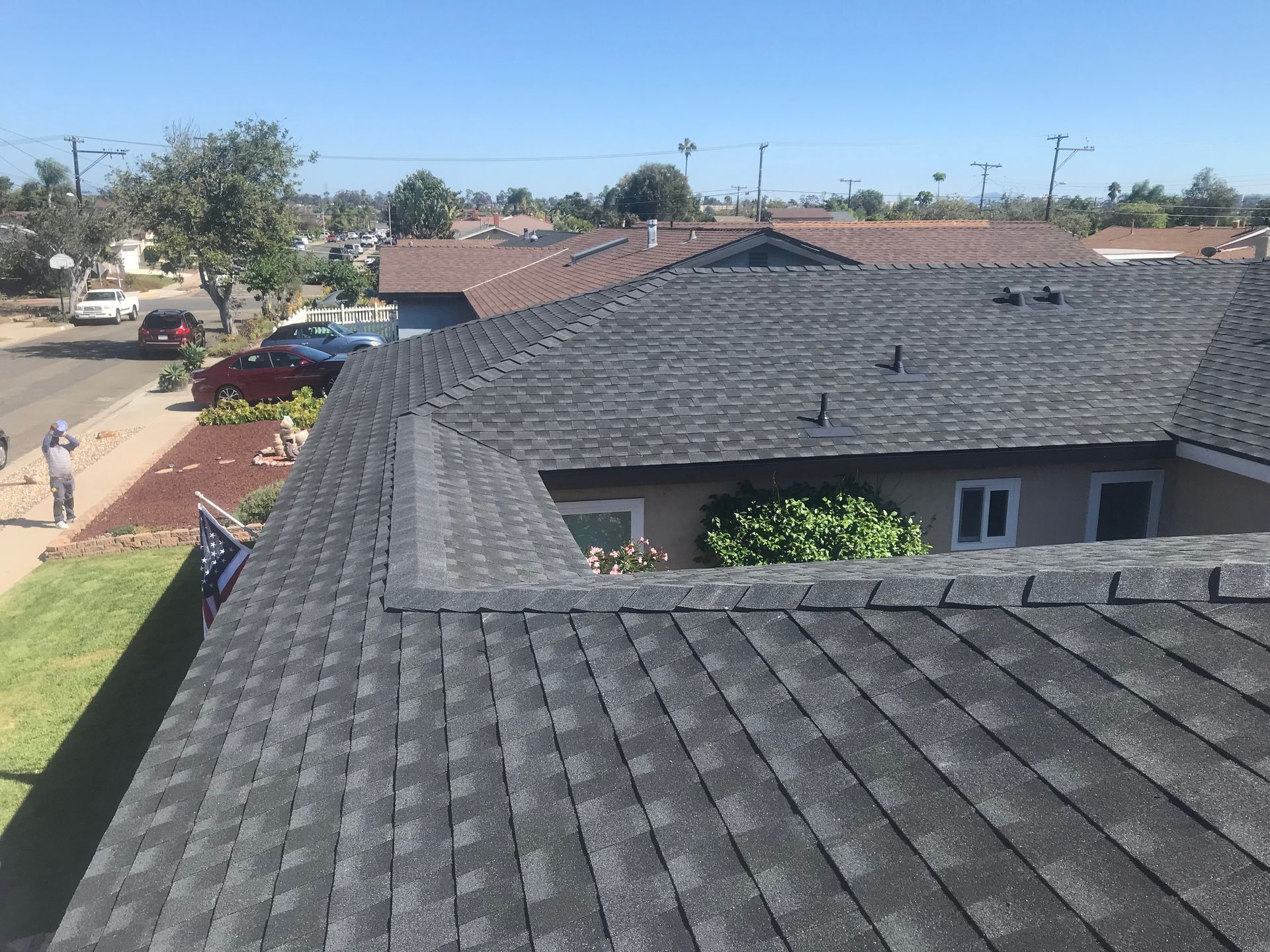
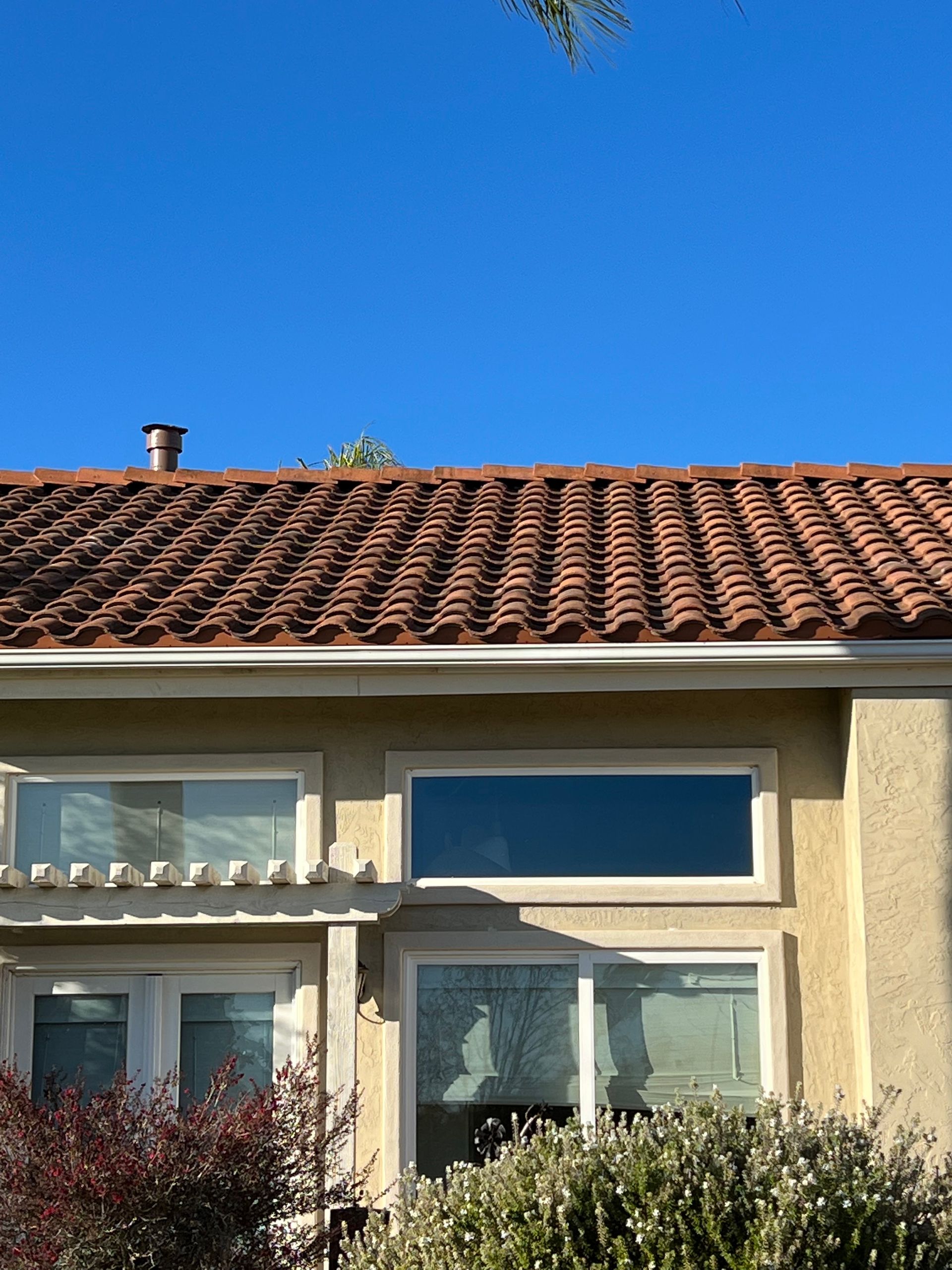
Photographs tell you more than a materials list can. Our gallery shows finished tile relays, shingle tear-offs, corrugated metal installs and flat roof rebuilds across the county, with enough close-up detail on flashing and ridge work to judge the finish yourself.


Common Questions
frequently asked
questions.
These are the questions we field most often on estimates across San Diego County. If yours is not here, ask us when we come out. No question about your own roof is a bad one.
How do I know if my roof needs replacing or just repair?
Age and the extent of the damage decide it. Isolated leaks on a roof with years of service left are repairs. Widespread granule loss, brittle underlayment, or moisture across several areas usually means the assembly has reached its end.
How long does a roof last in Southern California?
Asphalt shingles typically run 20 to 30 years here, metal panels 40 or more, and clay or concrete tile far longer. Constant ultraviolet exposure is the limiting factor rather than rainfall, so sun-facing slopes almost always age ahead of shaded ones.
What does the cool roof requirement mean for my re-roof?
California energy standards set minimum solar reflectance and thermal emittance values for replacement roofs, and low-slope roofs carry the strictest targets statewide. Compliant products are listed in the Cool Roof Rating Council directory, and we select from it together.
Do I need a permit to replace my roof?
Yes. A full replacement is permitted work in every jurisdiction across San Diego County, and the finished assembly gets inspected before the file closes. We pull the permit, meet the inspector, and hand you the signed final card afterward.
Will my homeowners insurance cover roof damage?
It depends on the cause. Sudden events such as wind, fire or a fallen limb are usually covered, while gradual wear and deferred maintenance are not. Documented photographs taken before repairs begin make the claim process considerably easier to argue.