
Flat Roofing Installation & Repair
FLAT ROOFING INSTALLATION & REPAIR IN San Marcos, CA
A low-slope roof still needs a quarter-inch of fall per foot to drain, and water sitting up there more than 48 hours after rainfall counts as ponding, which most manufacturers write straight out of the warranty. JCIS Roofing Inc. handles flat roofing in San Marcos, CA on residential additions, garages, parapeted homes and commercial buildings, installing torch-down and single-ply membrane systems, restoring structurally sound roofs with fluid-applied coatings, and rebuilding the drains, scuppers and seams that actually fail.
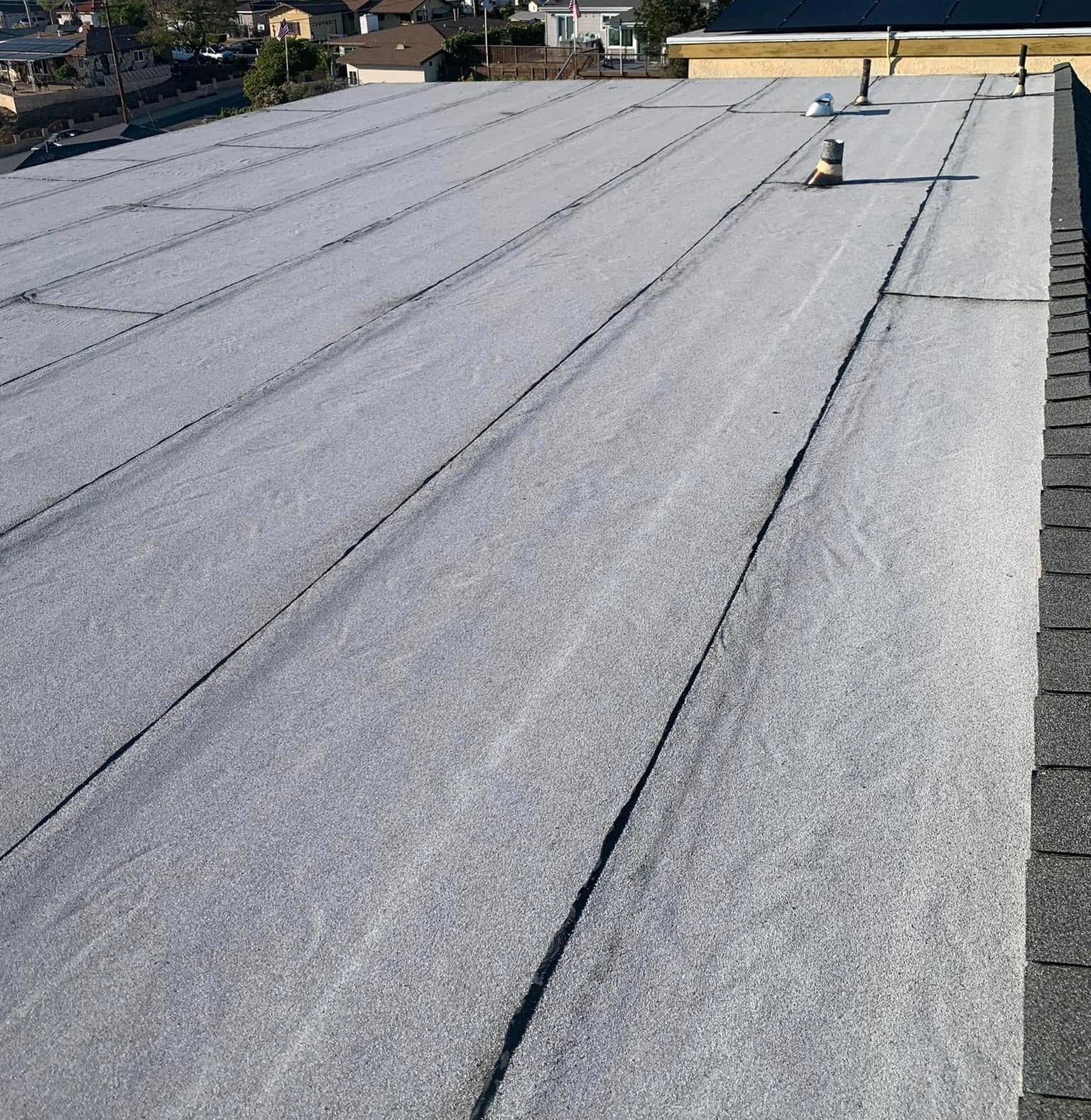
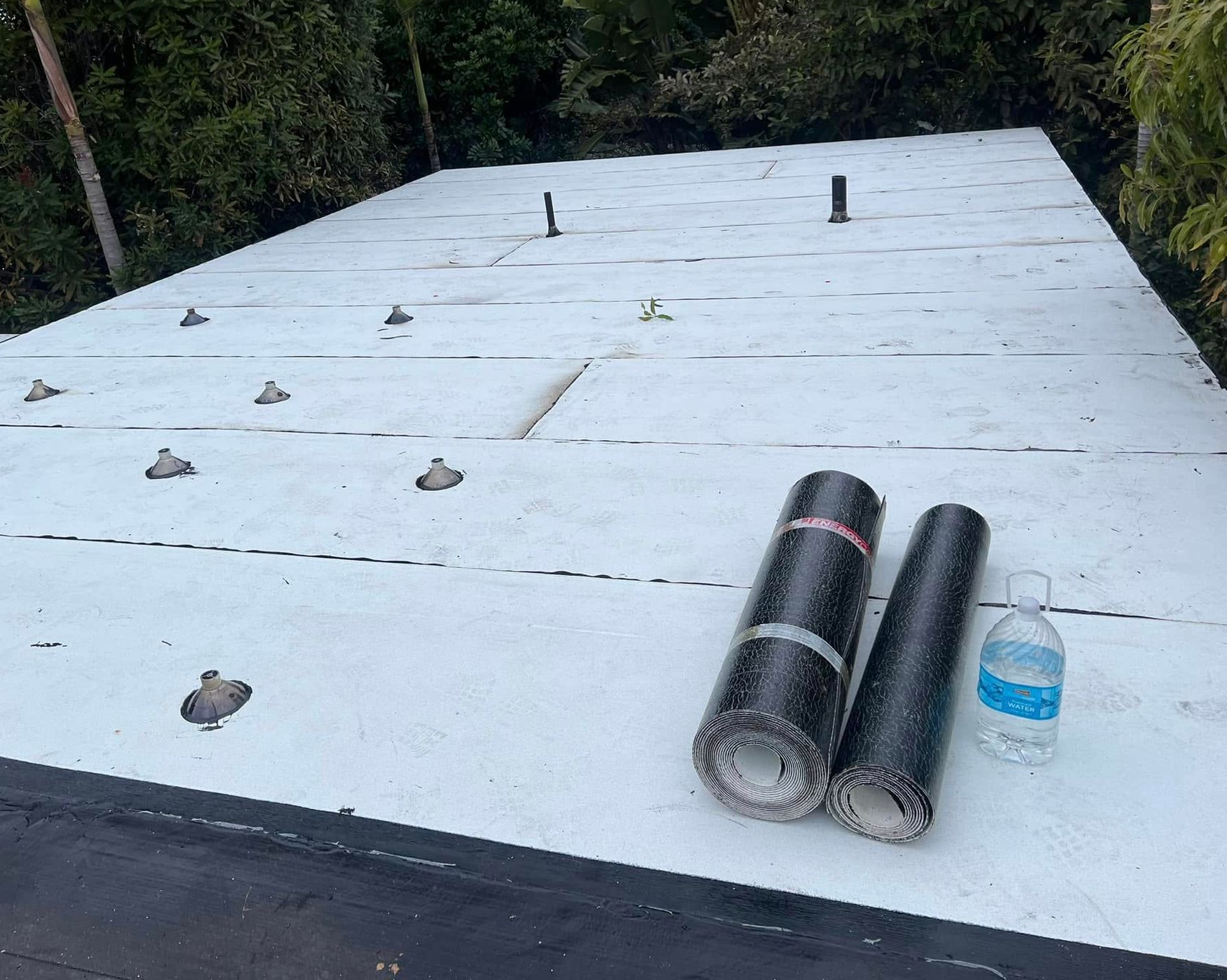
FLAT ROOFS DO NOT SHED WATER. THEY MANAGE IT.
Pitched roofs get rid of rain in a matter of seconds. A flat roof holds onto it, moves it sideways, and relies entirely on the membrane and the drainage design to get it away before it finds a seam. That single difference is why flat roofs reward careful detailing and punish shortcuts so heavily.
So we start with where the water goes, not with which membrane to sell. Slope, drains, overflows and scuppers get sorted first, because no material survives standing water indefinitely.
✓ Drainage assessed before any material is chosen
✓ Seams probe-tested along their full length
✓ Fire watch maintained on all torch-applied work
✓ Written warranty on materials and workmanship
FLAT ROOFING
SEAMS, DRAINS, AND EDGES DECIDE EVERYTHING.
Nobody has ever called us about a leak in the middle of an open membrane field. Failures happen at the laps, around the drains, at the parapet base, and where a pipe or curb comes through. So that is where the labor goes. Laps get welded or torched their full width and then probed, penetrations get proper prefabricated boots, and every edge gets terminated in metal instead of a bead of sealant hoping for the best.
MARINE AIR AND INLAND HEAT ATTACK MEMBRANES DIFFERENTLY.
Coastal properties fight corrosion at the fasteners, terminations and drain hardware, while inland roofs only a few miles east of them cook under far higher surface temperatures. The right membrane and the right hardware are simply not the same in Del Mar as they are in Escondido. We pick both according to where the building actually sits, which is a distinction that national roofing specifications never bother to make.
NOTHING ON A LOW-SLOPE ROOF SURPRISES US ANYMORE.
Blisters, fishmouths, split laps, a drain sitting a full inch above the deck, a parapet flashed with mastic and optimism: we have opened all of it at one point or another. That experience shows up as a shorter diagnosis and a quote that does not move once we start. Guesswork on a flat roof is expensive, because the water spreads sideways long before it ever drops. When did anyone last check your drains?
WHY CHOOSE US FOR FLAT ROOFING.
WATER THAT LEAVES ON SCHEDULE
Drains, overflows and slope all get treated as one system rather than patched separately. Your roof clears itself within the window your warranty requires, which stops ponding from quietly shortening the life of everything you have just paid for.
SEAMS THAT OUTLAST THE MEMBRANE
Every lap gets welded or torched across its full width, then probed along its length before we call the section finished. Seam failure is the most common cause of flat roof leaks, so it is where we spend the most attention.
A COOLER SPACE UNDERNEATH
Reflective membranes meeting the California energy standards send solar heat back skyward rather than storing it inside the assembly. Rooms and suites sitting directly beneath a flat roof become usable through summer instead of being written off entirely.
A WARRANTY THAT ACTUALLY STAYS VALID
Manufacturer coverage depends on installation detail and drainage performance, and both get documented on your job. If you ever need to make a claim, nothing about how the roof was built will give anyone grounds to decline it.
USABLE SPACE ABOVE YOUR HEAD
Properly built, a low-slope roof can carry equipment, walkways or a deck when it is designed for that from the start. We detail traffic areas and equipment curbs so the surface takes real use without the membrane suffering.
FEWER EMERGENCY CALLS IN WINTER
Most flat roof emergencies are simply last summer's small problems arriving during the first serious storm of winter. Catching blistered laps and blocked drains during the dry months converts a frantic wet-weather callout into routine scheduled maintenance instead.
WHAT WE INSTALL
OUR FLAT ROOFING WORK
Low-slope roofs need different answers depending on their size, their traffic and whatever sits on top of them. These six areas cover almost everything we are asked to install or put right.
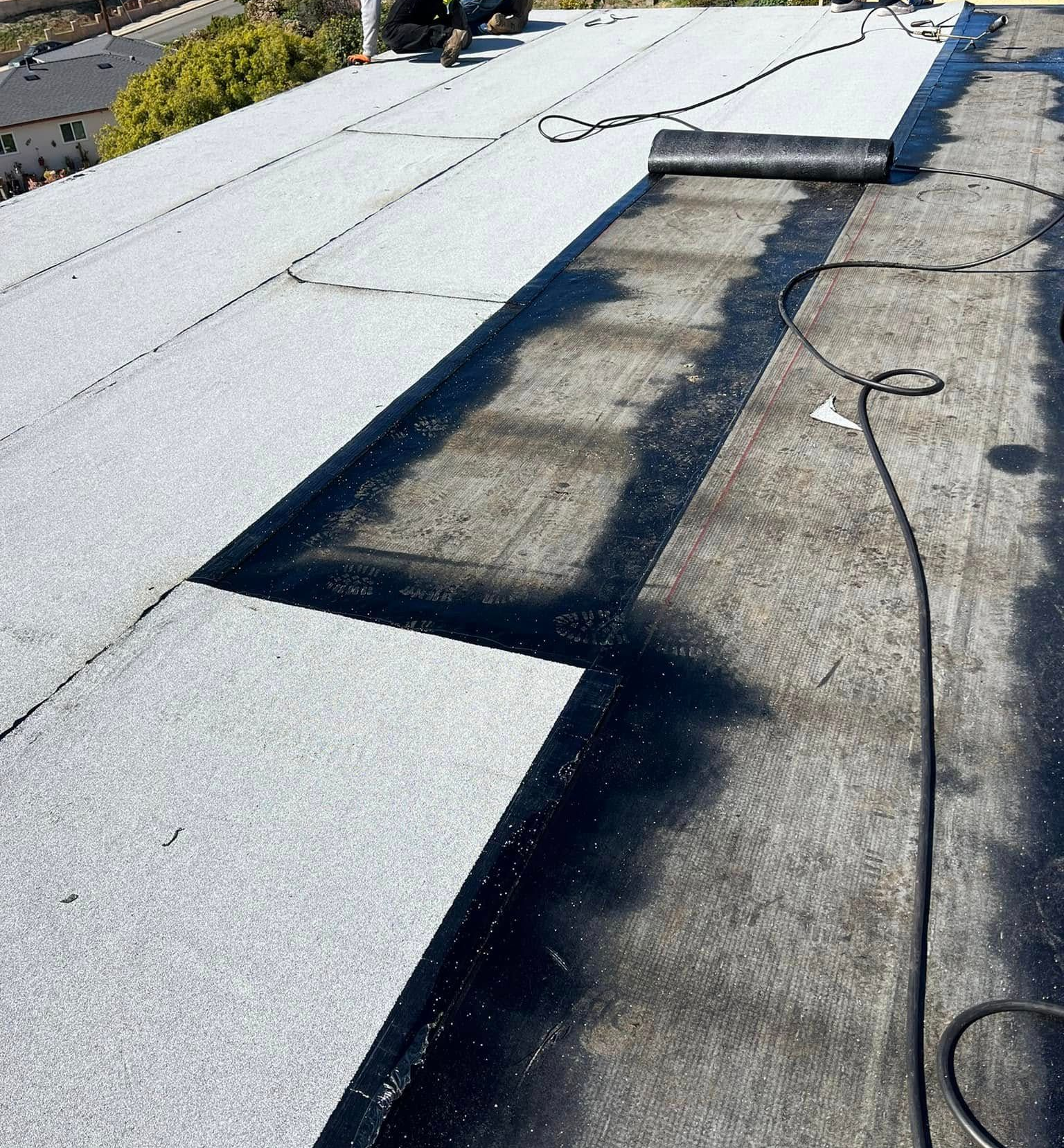
NEW BUILDS
Flat Roof Installation
New low-slope roofs start with drainage design, not material selection. We build in positive slope with tapered insulation where the structure lacks it, then install the membrane system best matched to the traffic and equipment that roof will carry.
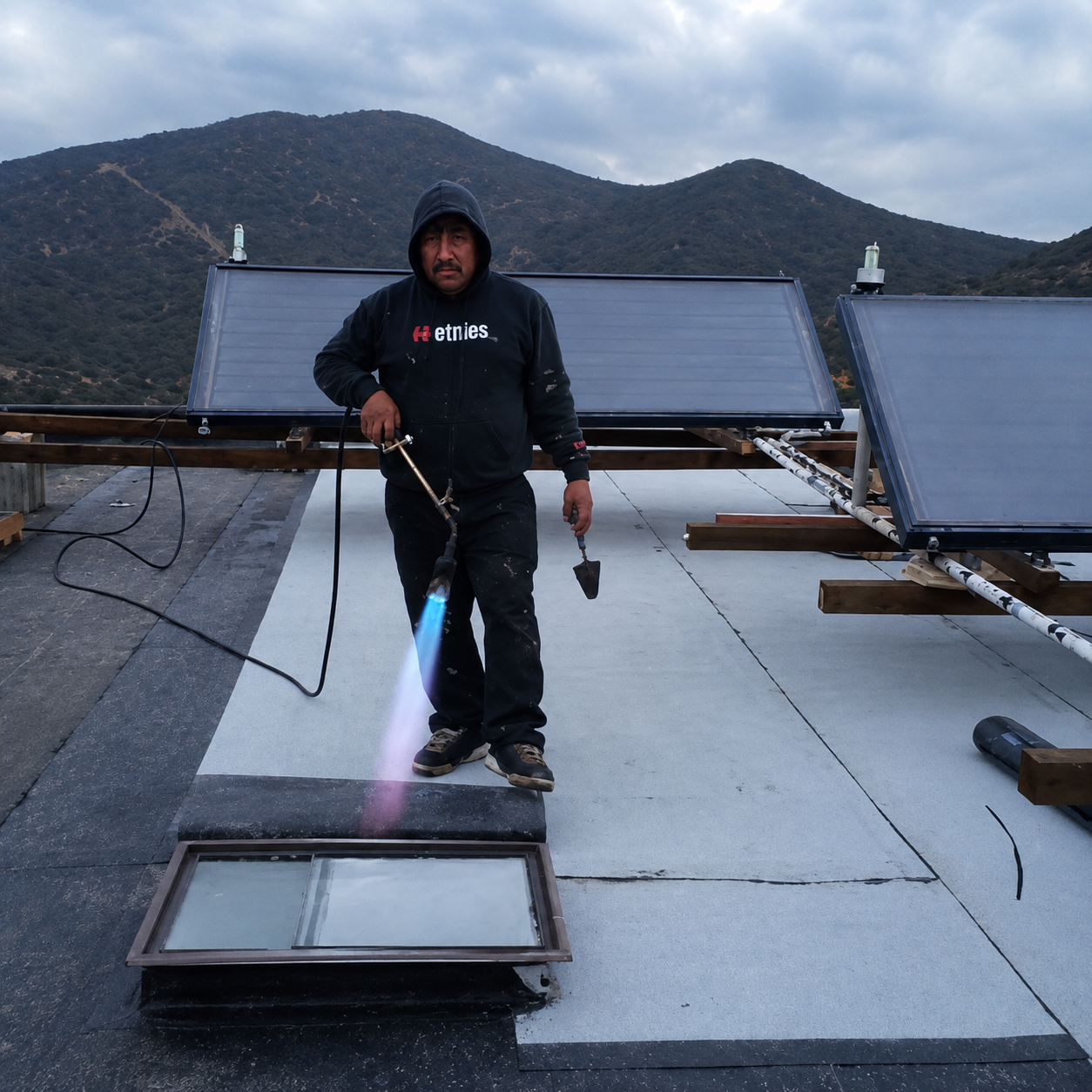
TORCH WORK
Torch-Down Modified Bitumen Roofing
Multi-ply modified bitumen is tough, forgiving underfoot and well suited to roofs carrying regular traffic. We apply it under a strict fire watch, with full edge, curb and penetration detailing and a granulated cap sheet meeting reflectance requirements.
WELDED SEAMS
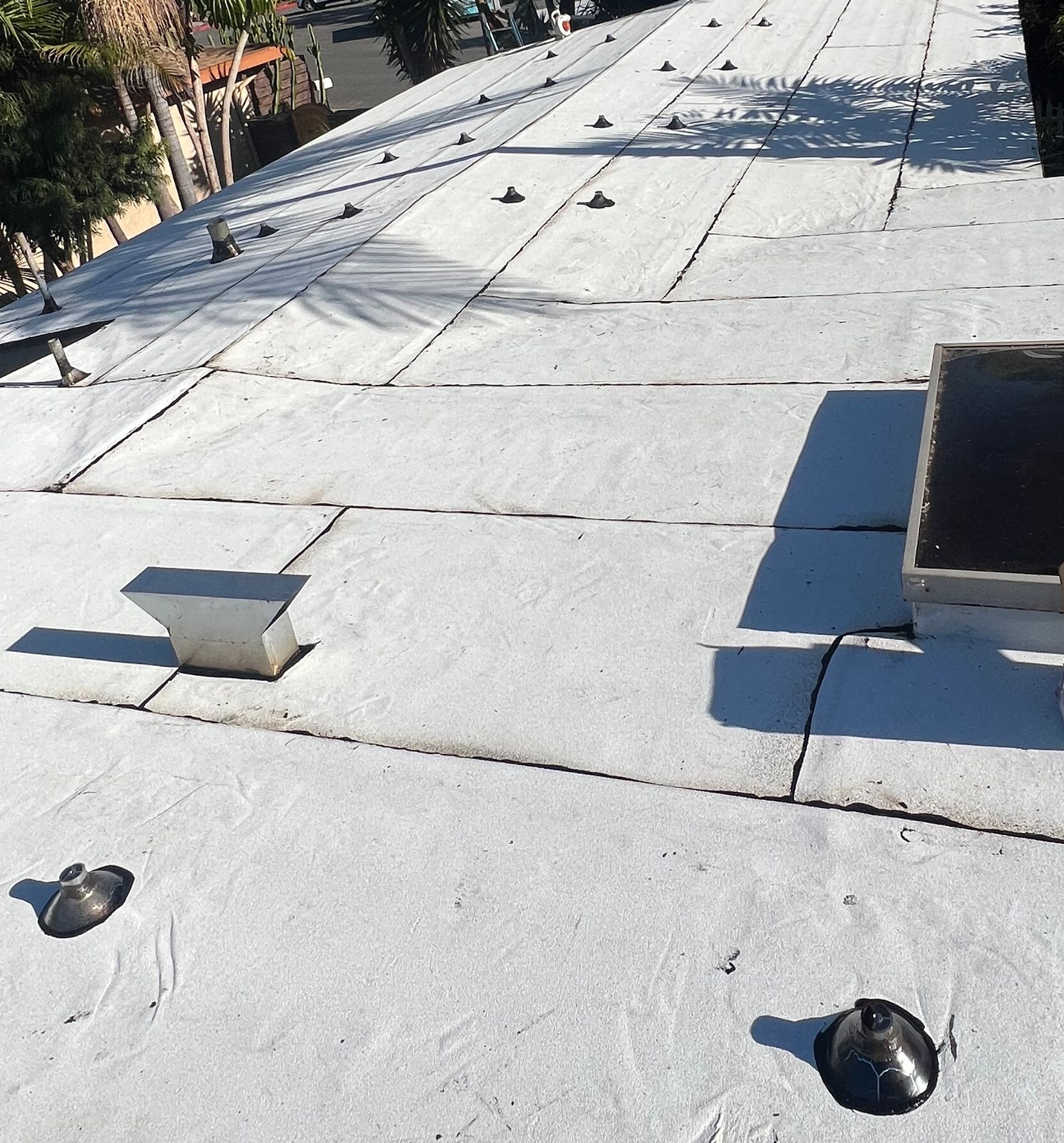
TPO and Single-Ply Flat Roofing
Heat-welded thermoplastic sheet delivers high solar reflectance and very long seam life in a single material. Welds are tested rather than trusted, and every pipe, curb and drain receives a prefabricated boot instead of a field-improvised sealant detail.
COATINGS
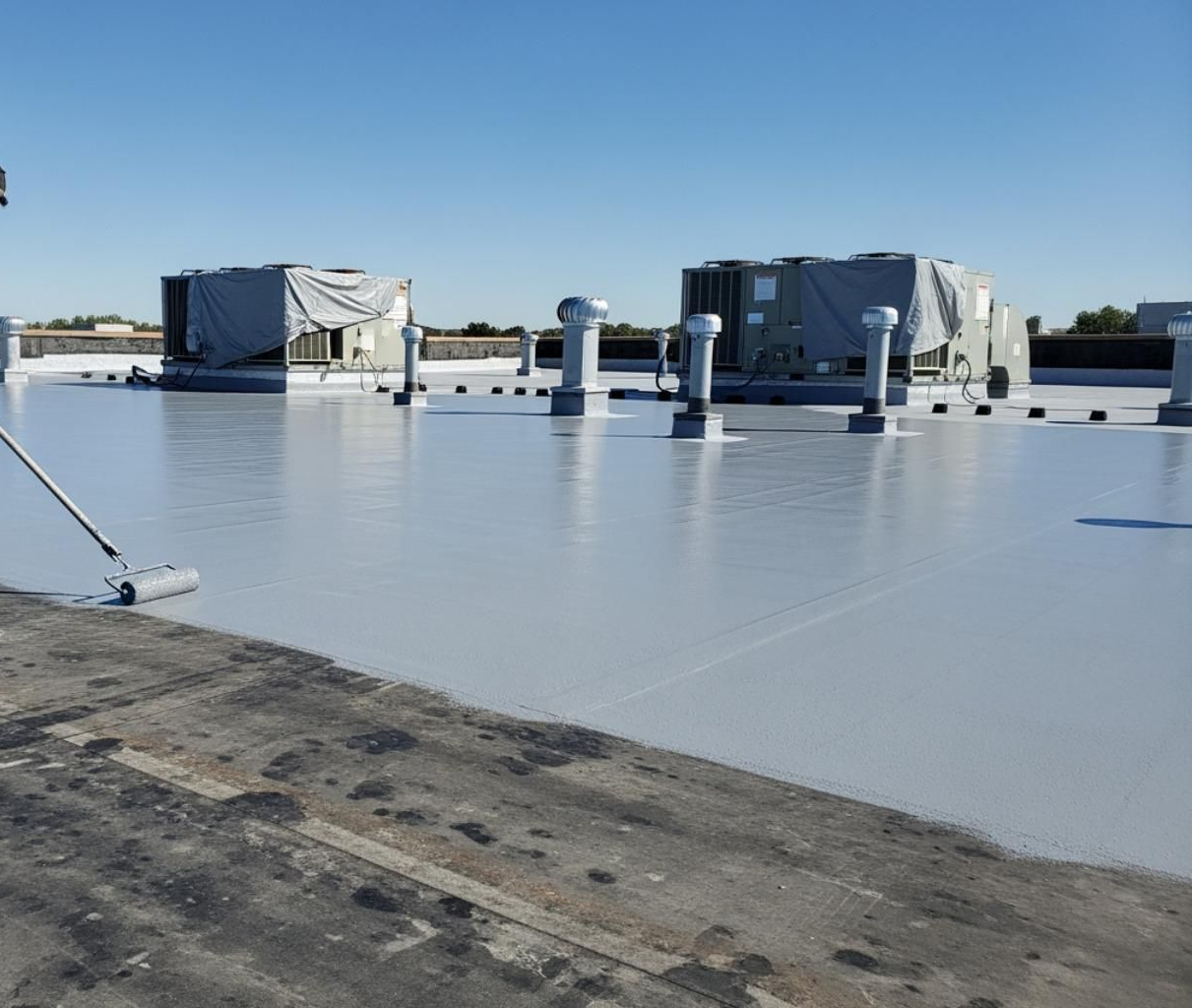
Flat Roof Coating and Restoration
A membrane with dry insulation beneath it and sound structure below that can often be restored rather than replaced entirely. We repair the seams, reinforce the details, then apply a fluid-applied coating that renews both waterproofing and reflectance.
WATER PATHS
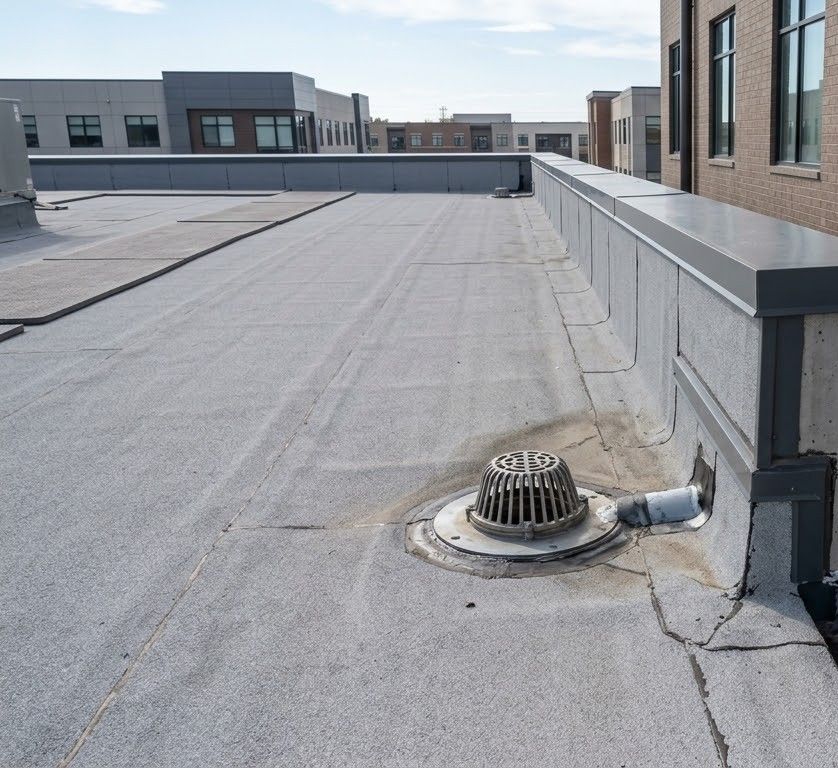
Drainage, Drain and Scupper Work
Ponding is a design fault far more often than it is a material fault. We add or relocate drains, rebuild scupper boxes and overflow outlets, and install tapered insulation to build slope where the structure never had any.
REPAIRS
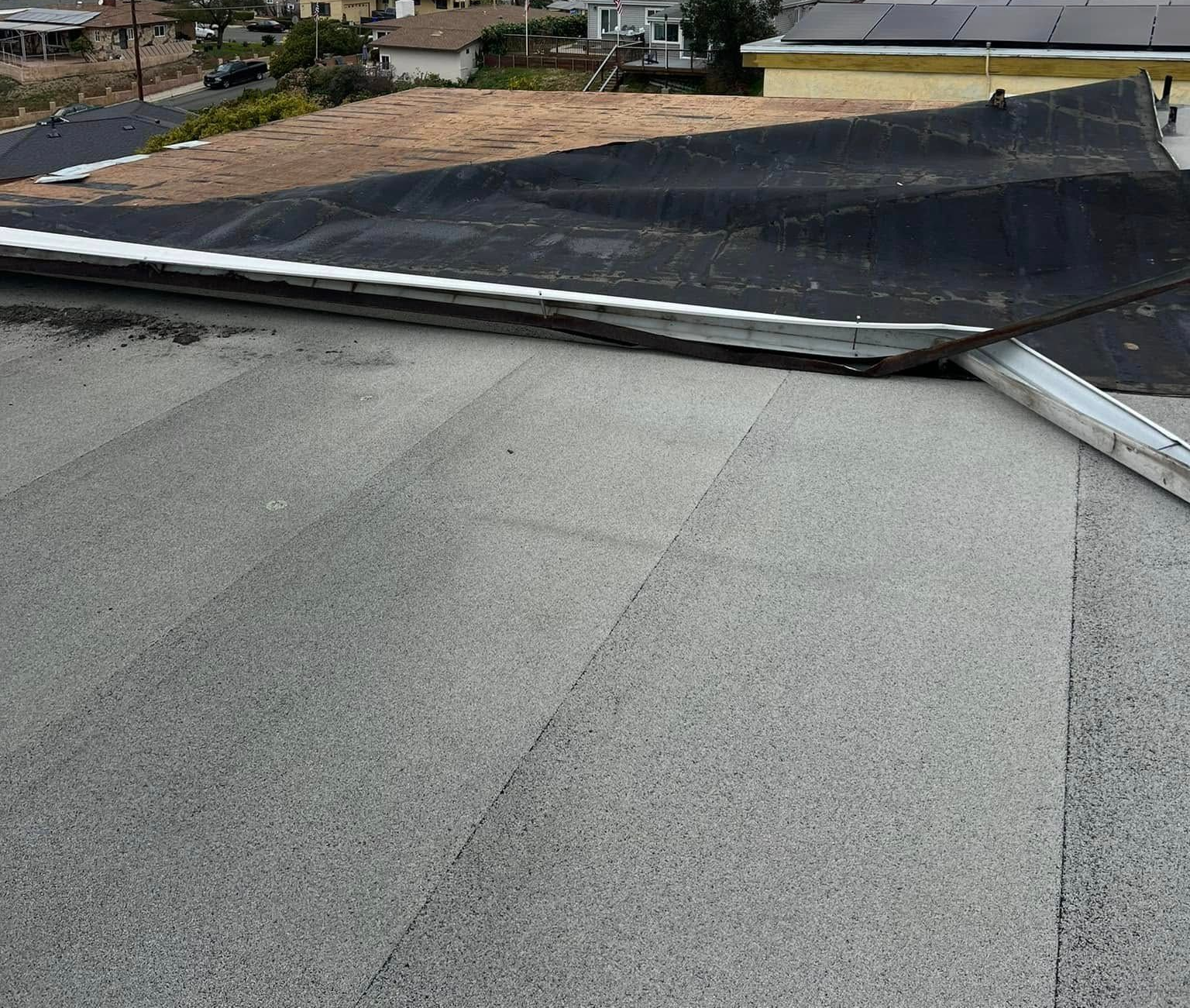
Flat Roof Leak and Seam Repair
We isolate the actual failure rather than coating the whole roof and hoping. Split laps, blisters, failed boots, corroded drain bowls and cracked parapet flashing each get cut back to sound material and rebuilt as the detail requires.
THE WORD ON OUR WORK
WHAT OUR CLIENTS SAY.
Flat roof clients almost always arrive having been let down at least once already, usually by a coating applied straight over a problem that nobody had bothered to diagnose. What they tell us afterward is that somebody finally explained where the water was actually getting in.
FAQ
FREQUENTLY ASKED QUESTIONS.
Low-slope roofs behave differently enough that these questions come up nearly every time. Anything particular to your building is best answered standing on the roof itself.
Why is my flat roof holding water days after it rains?
Because the slope, the drains or both of them are inadequate. Anything still sitting there after 48 hours qualifies as ponding, and it accelerates seam breakdown while voiding most manufacturer warranties, so it needs correcting rather than simply monitoring.
How do you find a leak on a flat roof?
Water travels sideways under a membrane, so the interior stain is rarely directly below the fault. We inspect seams, penetrations, drains and terminations methodically, then use controlled flood testing on a suspect section wherever the cause stays unclear.
Can a flat roof be recoated instead of replaced?
Often, yes, provided the insulation underneath is dry and the deck below is sound. Core samples settle that question quickly. Where saturation has spread, coating merely traps the moisture and postpones a replacement that has already become necessary.
What causes blisters and bubbles in a flat roof?
Trapped moisture or air between plies expands under heat and lifts the membrane. Small blisters can be monitored, but any that have split are open leaks. JCIS Roofing, Inc. cuts and repairs them properly across San Marcos, CA.
How is a parapet wall detailed on a flat roof?
The membrane turns up the wall and terminates in metal counterflashing or a termination bar, never in sealant alone. Parapet bases are among the most common leak points we find, precisely because that detail gets rushed so often.
Do flat roofs need more maintenance than pitched roofs?
Yes, meaningfully more. Drains block, debris collects across the surface, and the seams all need periodic inspection. JCIS Roofing, Inc. recommends twice-yearly visits on low-slope roofs right across San Marcos, CA, timed either side of the wet season.
Can solar panels or equipment go on a flat roof?
Yes, with the right detailing. Every mount, curb and conduit penetration needs proper flashing, and the layout has to preserve both the drainage paths and access to the drains. Coordinating all that before installation saves considerable trouble afterward.
What is the minimum slope a flat roof actually needs?
Membrane systems are generally permitted down to a quarter-inch of fall per foot. Genuinely dead-level roofs will always pond somewhere, which is why we add tapered insulation to build slope toward the outlets when the structure provides none.
HOW WE WORK
FROM PONDING WATER TO POSITIVE DRAINAGE, HERE IS HOW.
STEP 01
We survey the drainage first
Before anything else we work out where the water currently goes and where it stalls. Drains, overflows, scuppers and low spots all get mapped out, because that assessment shapes every decision made afterward.
STEP 02
We check under the membrane
Core samples tell us whether the insulation is dry, damp or fully saturated. That single answer decides whether you are looking at a localized repair, a coating restoration or a genuine tear-off and replacement.
STEP 03
We quote the honest options
Repair, restoration and replacement each arrive separately priced with an expected service life attached. You compare what each one buys you rather than being steered toward whichever route happens to suit us best.
STEP 04
We prepare the substrate properly
Wet insulation comes out, the deck is checked, and tapered material goes in wherever drainage needs building. Membrane laid over a compromised or ponding substrate fails early no matter how good the material is.
STEP 05
We install and detail the system
Field membrane goes on first, then every drain, curb, pipe, edge and parapet base gets detailed to specification. Torch work runs under a full fire watch, and welded seams are probed along their entire length.
STEP 06
We test it and document it
Drains get flood tested wherever the design allows for it, and the finished roof is photographed in detail. You receive warranty registration, as-built details and a written maintenance schedule covering the seasons ahead.
Get Your Free Estimate
KNOW WHERE YOUR WATER GOES, FREE.
Book a survey through our contact page and we will map the drainage, check what sits under the membrane, and price the realistic options side by side. No obligation, and no coating quoted over a problem that needs solving properly.
WHAT YOUR FLAT ROOF SURVEY COVERS
✓ Drainage mapping and ponding assessment
✓ Seam, edge and penetration inspection
✓ Moisture check of the insulation layer
✓ Repair, restore and replace priced separately
✓ Expected service life for each option
✓ Photographs of every defect we find