Roof Repair Services
ROOF REPAIR SERVICES IN San Marcos, CA
Leaks almost always begin at a transition rather than out in the open shingle field: a valley, a wall intersection, a chimney saddle, or a pipe boot the sun has turned brittle and split. JCIS Roofing Inc. handles roof repair in San Marcos, CA across shingle, tile, metal and low-slope roofs, tracing water back to its true entry point before anything at all gets opened up, and bringing 30+ years of local leak-chasing to the diagnosis we hand you.
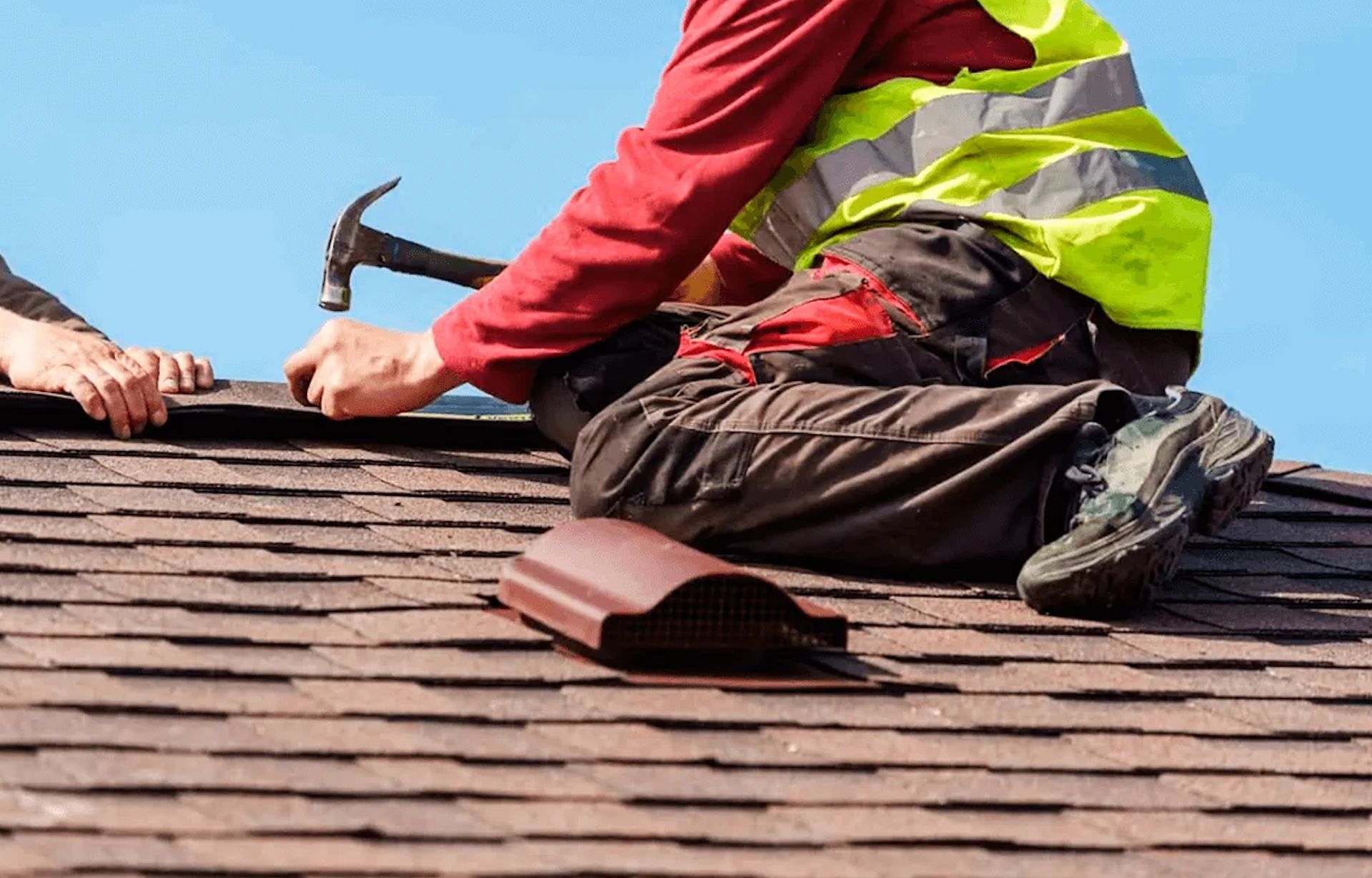
SMALL LEAKS ARE CHEAP. IGNORED LEAKS ARE NOT.
A drip that shows up once a winter feels ignorable, and that is precisely how a sheathing panel quietly rots through. Water travels along rafters and insulation long before it ever reaches a ceiling, so by the time you see a stain the wet area is usually several times larger than the mark on your drywall suggests.
Catching it early keeps the job inside a single day and a single trade. Waiting turns it into framing repair, drywall, paint and sometimes insulation.
✓ Same-week response on active leaks
✓ Interior and exterior inspection on every call
✓ Photographs of the actual failure point
✓ Repairs backed by a written warranty
ROOF REPAIR
OPENING THE ROOF IS THE LAST STEP, NOT THE FIRST.
Guessing is expensive, so we do not do it. We start inside, reading the stain pattern and probing for moisture in the attic, then work outward to the roof plane feeding that area. Only once the entry point is confirmed does anything come apart. That discipline keeps repairs small, keeps material costs down, and stops the familiar pattern of a contractor sealing three likely spots and hoping one of them was right.
OUR RAIN ARRIVES ALL AT ONCE OR NOT AT ALL.
North County goes months without meaningful rain, then takes a season's worth in a handful of storms. Roofs here spend most of the year drying out and cracking, and are then asked to handle serious volume overnight. That is why so many local leaks appear on the first real storm rather than gradually. We look for sun damage in the dry months, because that is when it can still be fixed cheaply.
DIAGNOSIS COMES FIRST. THE QUOTE COMES SECOND.
Any roofer at all can sell you a repair. Finding the actual fault takes real time on a ladder, in an attic, and occasionally with a hose running for an hour. We do that work first and quote afterward, which is why our repair estimates rarely change once the roof is open. Nobody enjoys paying twice for the same leak. Would you rather have a guess or an answer?
WHY CHOOSE US FOR ROOF REPAIR.
A LEAK LOCATED, NOT GUESSED AT
You pay to fix the fault that is actually letting water in, not the three most likely candidates. That means one repair, one invoice, and a ceiling that stays dry through the next storm rather than the next dry spell.
DAMAGE THAT STOPS SPREADING TODAY
Wet framing, sodden insulation and stained drywall all get worse every week they stay wet. Stopping the source quickly limits the repair to roofing work instead of pulling in a framer, an insulation crew and a painter behind us.
MORE YEARS FROM THE ROOF YOU HAVE
A sound roof with one failed detail does not need replacing. We will tell you when repair is the sensible economics, which often buys another 5 or 10 years of service from an assembly you have already paid for.
A REPAIR THAT BLENDS IN PROPERLY
Matching the profile, color and course lines matters on a repair you have to look at every day. We source the closest available material and weave it into the existing field rather than leaving an obvious rectangle sitting overhead.
EVIDENCE YOUR INSURER WILL ACCEPT
Dated photographs of the damage, the underlying cause and the completed repair go into your file automatically. If a claim follows, you already hold the documentation an adjuster asks for instead of trying to reconstruct it months later.
STRAIGHT TALK ABOUT WHEN TO STOP
There is a point where repair money is better spent on replacement, and we will say so plainly. You get the arithmetic rather than a sales pitch, even when the honest answer costs us the smaller job standing in front of us.
WHAT WE FIX
OUR ROOF REPAIR WORK
Six repair types account for most of what we are called out to. Some show up as an obvious drip and others as a stain that appeared long after the storm that caused it.
LEAK HUNT
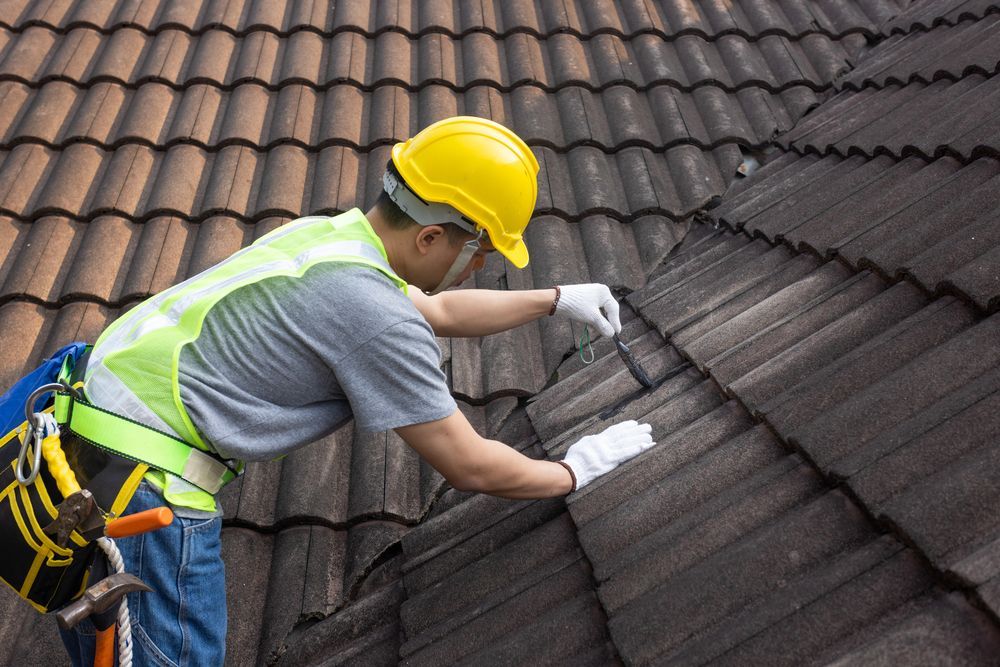
Roof Leak Detection and Tracing
Water rarely enters anywhere near where it appears. We read the stain pattern from inside, probe the attic for moisture, then work the corresponding roof plane systematically until the true entry point is confirmed and photographed for you.
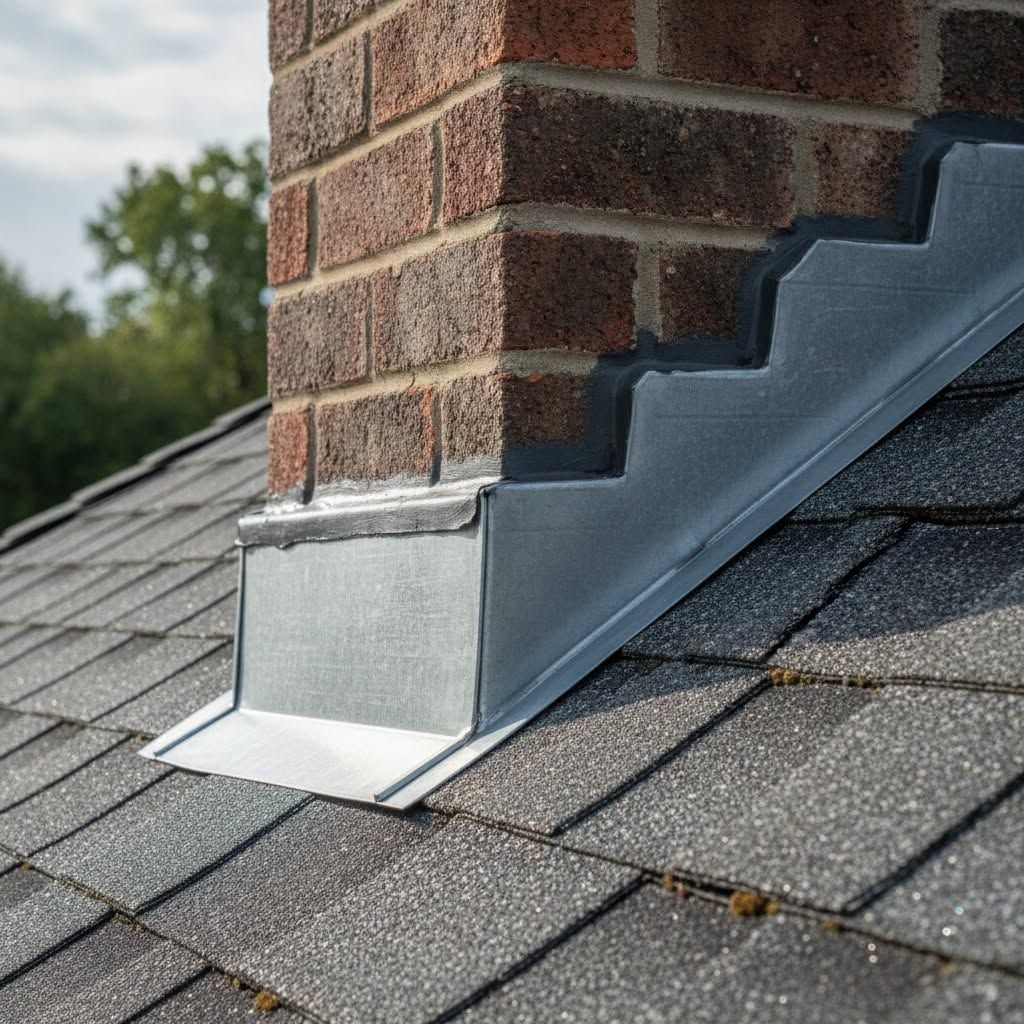
FLASHING
Chimney, Skylight and Wall Flashing Repair
Sealant fails long before metal ever does, yet it is what most flashing repairs still rely on. We rebuild these details in properly lapped step and counter flashing so the joint sheds water instead of merely being stuck together.
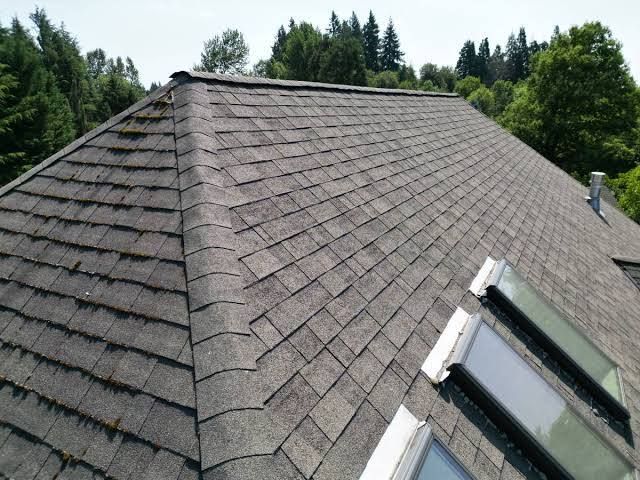
SHINGLE WORK
Shingle and Ridge Cap Repair
Wind lifts tabs, ultraviolet exposure curls the edges, and ridge caps loosen wherever the sealant strip has given out. We replace the affected courses, re-seal correctly, and check the surrounding field for the damage that usually accompanies it.
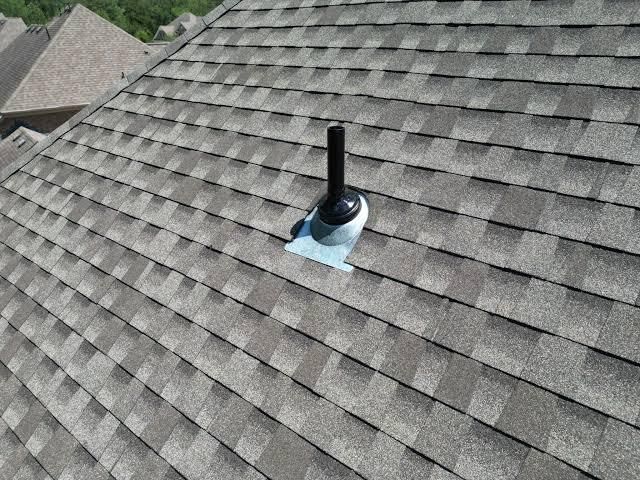
BOOTS AND VENTS
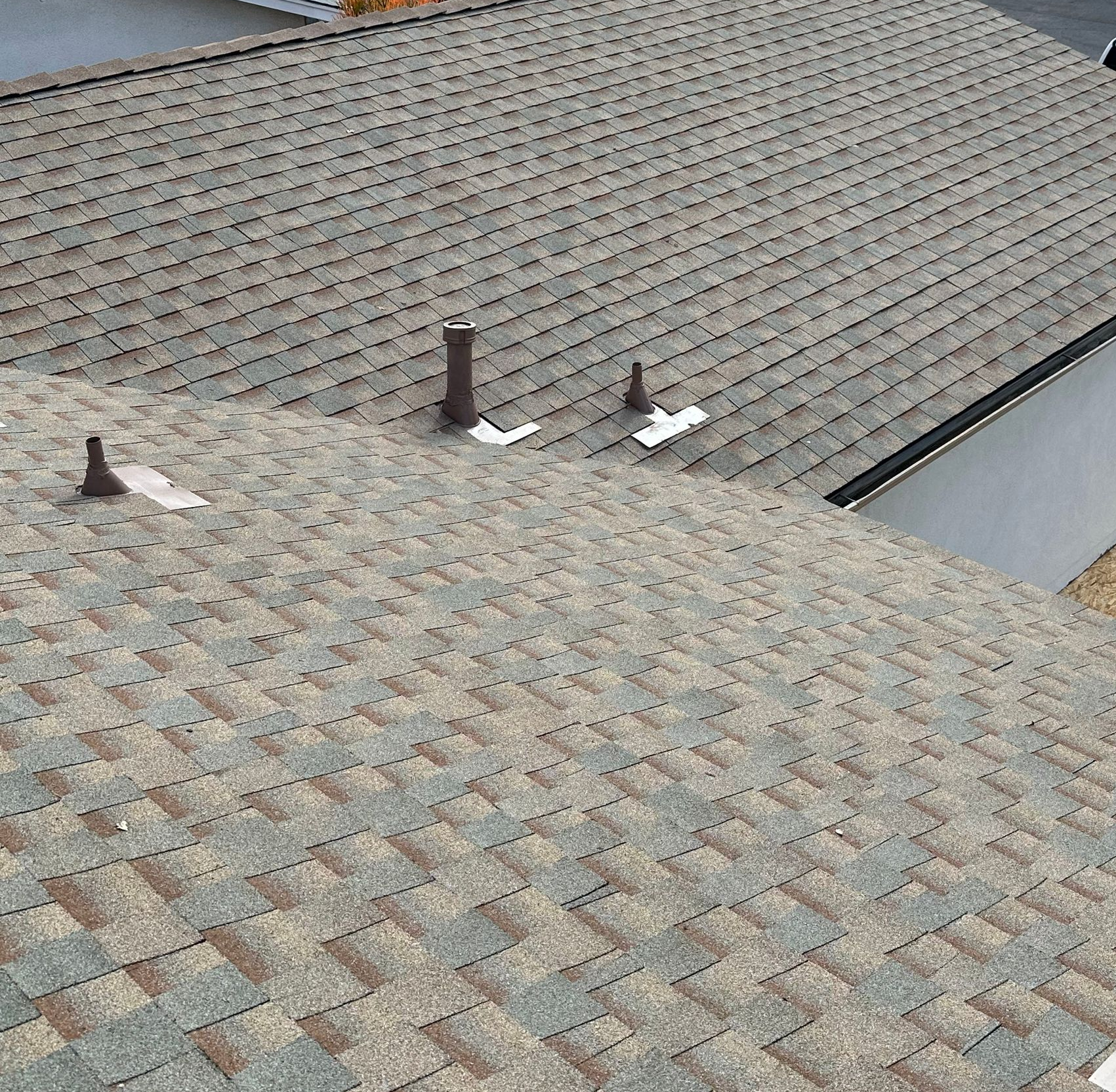
Pipe Boot and Roof Vent Replacement
Rubber pipe boots crack years before the roof around them wears out, and they cause a surprising share of interior leaks. We swap them for longer-life collars and reflash every vent, turbine and stack while we are up there.
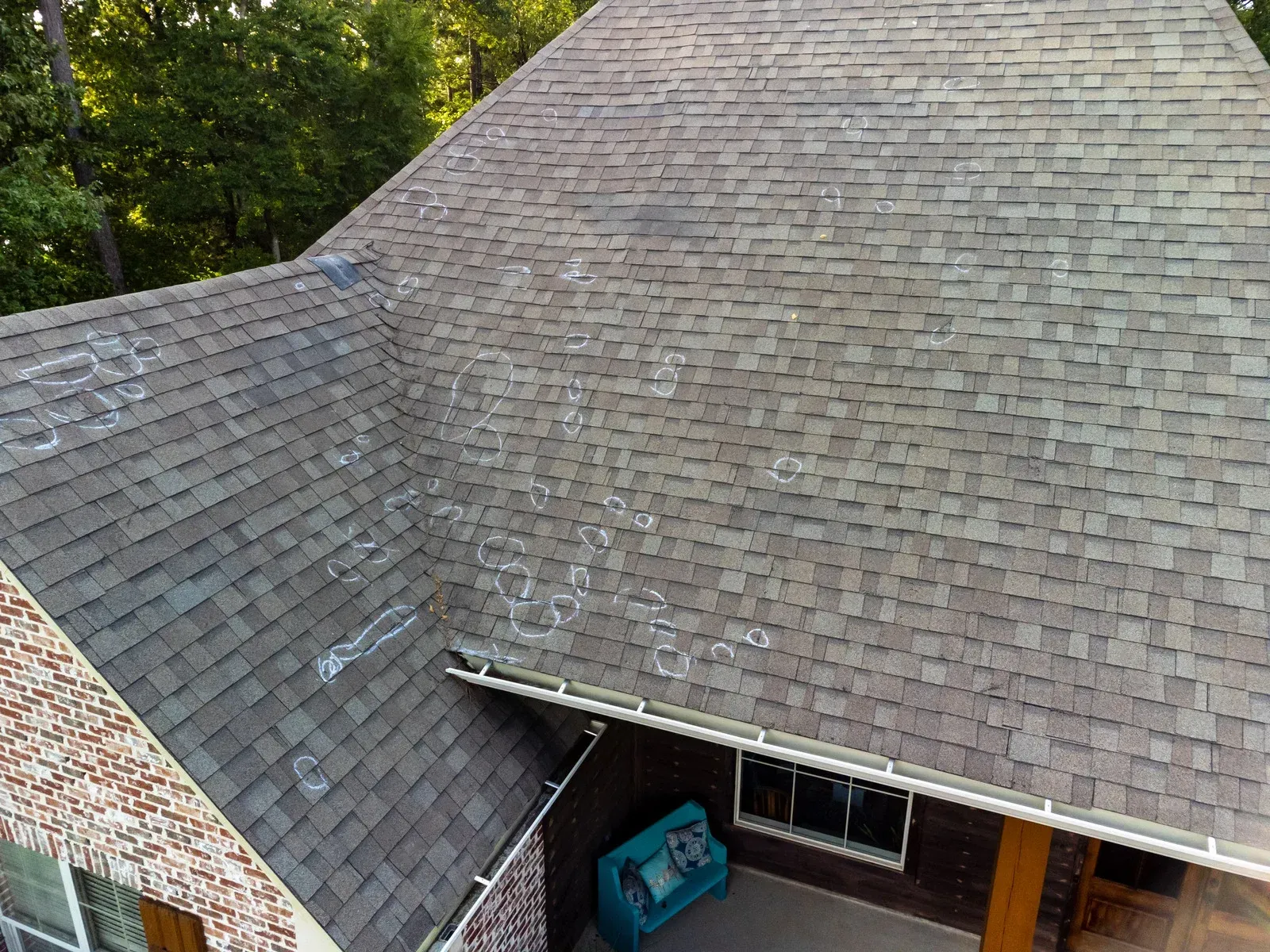
STORM CALLS
Wind and Storm Damage Repair
After a serious blow we document everything first, then make the roof watertight again. Displaced tile, lifted shingles, bent flashing and torn membrane all get photographed and priced out separately so an insurance claim has something solid behind it.
DRY ROT
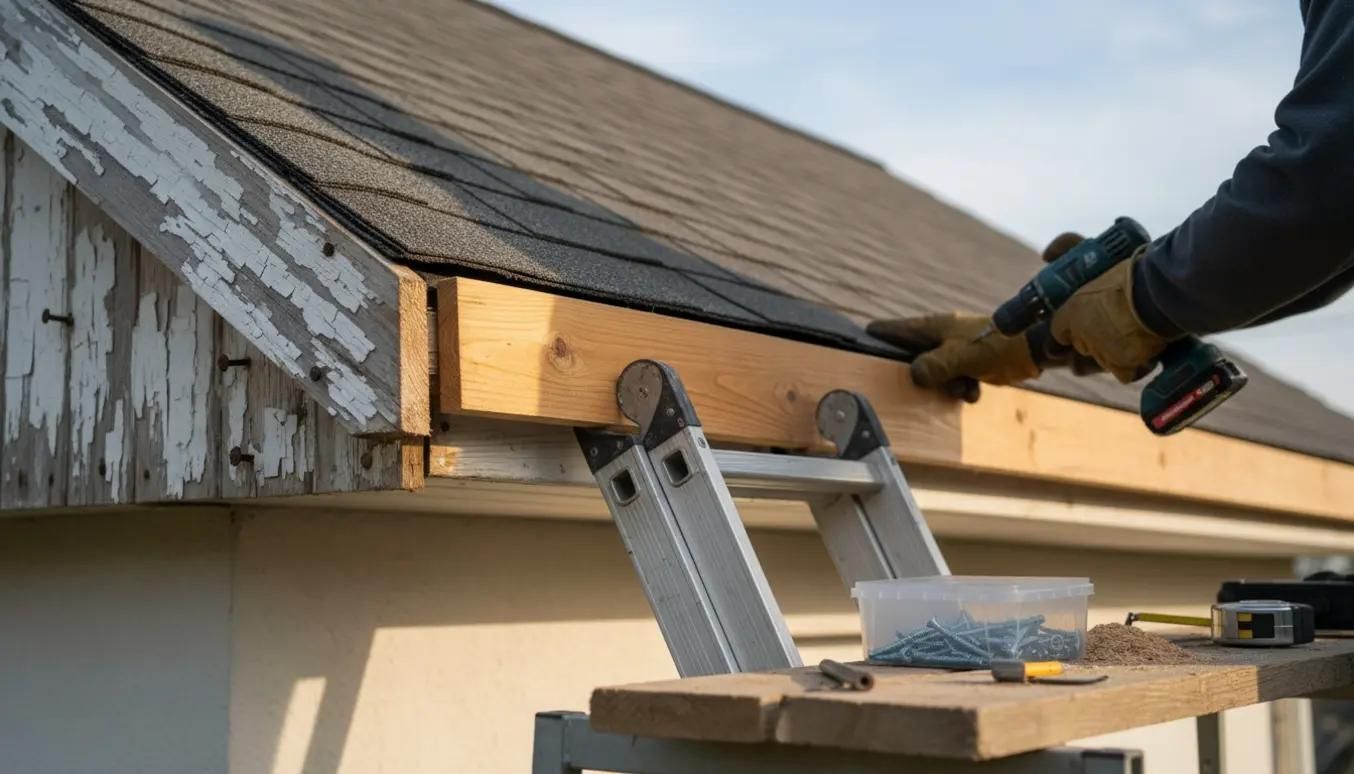
Fascia, Eave and Deck Rot Repair
Long-running leaks soften the wood at the roof edge, which is precisely where nobody ever looks. We cut back to sound material, replace the rotted sheathing and fascia, then correct the drainage problem that let water sit against it.
THE WORD ON OUR WORK
WHAT OUR CLIENTS SAY.
Repair customers tend to remember two things: whether the leak came back, and whether anyone explained what caused it. The reviews we are proudest of are the ones mentioning both, often from people who had already paid someone else to fix the same spot.
FAQ
FREQUENTLY ASKED QUESTIONS.
These come up on most repair calls. If your situation is not covered here, describe it when you book and we will tell you honestly whether it needs a same-week visit.
How do you find a leak when the stain is nowhere near the roof damage?
Water runs along rafters, decking and insulation before it drops. We read the stain, probe the attic for the wet path, and follow it uphill to the roof plane above, which is often several feet from the visible mark.
Can a roof be repaired while it is still raining?
We can make a roof watertight in wet weather with tarping and temporary sealing, and we do that when water is actively entering. Permanent repair waits for a dry, safe surface, because most materials will not bond properly to wet substrate.
How long should a roof repair last?
A properly rebuilt detail should outlast the roof surrounding it. Repairs relying on sealant alone typically get 3 to 5 years at best, which is why we rebuild in metal wherever the geometry of the detail allows for it.
Is it worth repairing a roof close to the end of its life?
Sometimes. If the covering has a couple of seasons left and the leak is isolated, a repair buys useful time cheaply. JCIS Roofing, Inc. will run those numbers with you across San Marcos, CA rather than defaulting to replacement.
Why do pipe boots fail so often?
The rubber collar sits fully exposed to ultraviolet light with no shade and no protection. It hardens, splits at the pipe, and starts letting water straight into the deck, usually while the shingles around it still have years of service remaining.
What is the difference between a patch and a proper repair?
Patch work covers the symptom, usually with sealant smeared over the suspected area. A proper repair removes the failed component, corrects whatever caused it, and rebuilds the detail so water gets directed away rather than simply blocked temporarily.
Can you match my existing shingles or tile?
Usually, yes. Profiles stay in production for years and weathered color can be blended by pulling replacement material from a less visible slope. JCIS Roofing, Inc. keeps common San Marcos, CA tile profiles on hand for exactly this reason.
Do small leaks cause structural damage?
They can, given enough time. Repeated wetting rots sheathing and rafter tails, corrodes fasteners and ruins the insulation, and none of that stays visible from inside until it becomes significant. A leak returning every winter is quietly compounding damage.
HOW WE WORK
FROM LEAK CALL TO DRY CEILING, HERE IS HOW.
STEP 01
We listen to the history first
When it leaks, how heavily, and whether anyone has worked on it before all narrow the search considerably. A leak that only appears in wind-driven rain points somewhere very different from one that shows up in every shower.
STEP 02
We inspect inside and out
The attic often tells the story faster than the roof surface does. We look for wet insulation, stained framing and daylight showing through, then carry that information up onto the corresponding roof plane above it.
STEP 03
We confirm the entry point
Suspicion is not enough to justify opening a roof. Where the fault is not obvious we run controlled water testing, section by section, until the leak reproduces and we can photograph exactly what is failing.
STEP 04
We price the repair honestly
You get a written figure covering the confirmed fault, along with anything nearby that is heading the same way. Optional items stay clearly separated so you decide what happens rather than finding out afterward.
STEP 05
We rebuild the failed detail
The damaged component comes out completely and the detail gets rebuilt to shed water properly. Where the geometry allows, sealant becomes a secondary defence behind correctly lapped metal rather than the primary one.
STEP 06
We test it and document it
Water goes back on the repaired area before we call it finished. You receive before and after photographs, a written description of the cause, and warranty terms covering the work we carried out.
Get Your Free Estimate
FIND THE LEAK AND KNOW THE PRICE, FREE.
Book a repair visit through our contact page and we will trace the fault, photograph it, and give you a written figure before touching anything. No obligation, and no pressure toward a replacement you do not yet need.
WHAT YOUR REPAIR ESTIMATE COVERS
✓ Interior and attic moisture inspection
✓ Roof-plane inspection of the affected area
✓ Photographs of the confirmed entry point
✓ A written price for the repair itself
✓ Any nearby details heading the same way
✓ An honest repair-versus-replace opinion